
Hey loves,
Today’s blog post is a guide to body image, a broad subject that includes the body positivity movement and body dysphormia.
As long as we have bodies, we have body image so let’s learn how to love our own bodies and improve our self image.
Body image is firstly a choice, however, it can be influenced by factors like upbringing, family, the society you live in, your life experiences and the media you consume.
Body image can be positive or negative and can lead from thriving to social isolation depending on how you perceive yourself.
In extreme cases, distorted body image can lead to mental afflictions like body dysphormia or eating disorders.
Both genders can suffer from body image related disorders with men being more prone to muscle dysphormia.
What is body image?
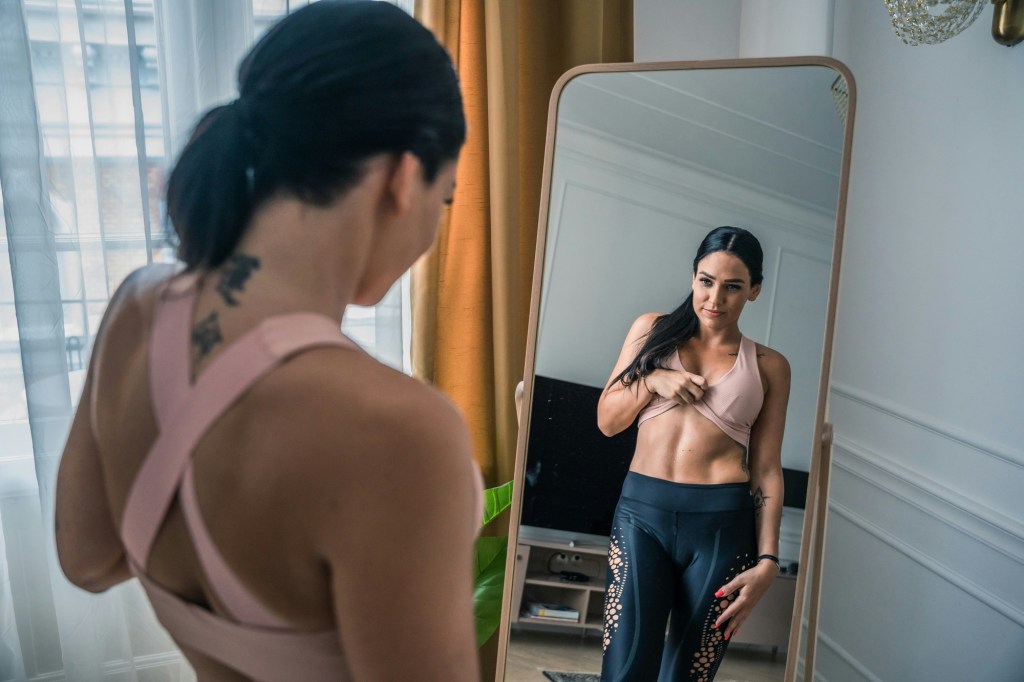
Body image refers to our self-perception, just how we perceive ourselves and our bodies. Our body image can be positive or negative, meaning we can perceive of ourselves in numerous ways despite our objective appearance.
Body image also impacts us in numerous ways, from our interpersonal relationships to our professional life.
Having positive body image affects our self esteem, self concept and our ability to thrive in life. The detriment of negative body image is that it can rob our confidence, keeping us from taking chances and risks.
Positive body image:

Positive body image refers to us having a positive self-image. We view ourselves favorably and think others view us in the same way. This is a more accurate way of experiencing ourselves.
Furthermore, we accept and are satisfied with our physical appearance.
Body positivity movement: social media
The aim of the body positivity movement on social media is to challenge unrealistic beauty standards. It essentially works by altering our perceptions of what an attractive body is.
Social media accounts or traditional media use images of women who are not underweight, edited or fitting the norm in terms of size, shape of appearance.
The types of women or men that are shown can be average sized, fat, tall, short, have acne, stretch marks or body hair. None of their images are edited or filtered, these individuals are shown as they are.
Viewing these types of images and bodies actually results in our preference for different shapes and sizes of bodies as the ideal and improves our own body satisfaction.
Negative body image:

Negative body image essentially means that we do not accept nor are we satisfied with our bodies. Having negative body image means we want to change what we look like.
People with negative body may experience shame, anxiety or awkwardness around their own bodies. This can lead to eating disorders, depression, dieting, anxiety and low self esteem.
Causes:
- Diet culture
- Watching one or both of your parents struggle with their body image
- Watching one or both of your parents constantly diet or over exercise
- Media influence (social media, tv, magazines)
- Suffering from a mental disorder (ie: anxiety, depression, OCD)
- Culture (some cultures have high beauty standards/are critical over appearance/value thinness/have traditional gender roles)
- History of trauma or abuse
Body dysphormia:

Body dysphormic disorder (aka: body dysphormia) refers to our preoccupation regarding a particular flaw that we may have.
This flaw can be minor or made up but it becomes larger in the mind of somebody who is afflicted with this disorder.
Furthermore, the person suffering from this disorder can stop living their lives because of it.
They may isolate themselves and hold themselves back from forming bonds that would actually help rid them of the disorder. They also end up seeking plastic surgery the most.
What makes this disorder noteworthy is the intensity of the preoccupation in the mind of the person suffering with it.
1-2% of the general population suffers from this affliction with 5 to 7% of the cosmetic surgery population who are afflicted.
Muscle dysphormia:
Muscle dysphormia is a subset of body dysphormia and primarily affects men. Think of this disorder as the male equivalent of anorexia. This condition is also known as bigorexia and affects 2% of the population.
The person suffering from this affliction never feels big enough. No matter what the objective reality of their body is, the person who is suffering from this disorder sees themselves as small and undermuscled.
This leads the person to exercise to greater amounts and live a life that is fully committed to the gym in order to achieve a more ‘desirable’ physique.
While training and dedicating one’s life to the sport of bodybuilding is not inherently bad or harmful, these individuals focus solely on muscle gain, often to the detriment of their social or professional lives.

Eating disorders:
Eating disorders are mental disorders characterized by a need for control via underconsumption, overconsumption or a mix in order to achieve an underweight physique.
Eating disorders are not only harmful but can be fatal, as an individual may diet their way to a weight that barely sustains their organs and inner processes.
How to get help:
Getting help often looks like reaching out to a therapist or loved one. It looks like implementing self love practices or self care.
It sounds like developing a positive inner dialogue and being compassionate towards one’s appearance/self.
It includes nurturing more positive relationships and partaking in healthy activities and practices such as the ones below.

Ways to boost body positivity:
- Journal
- See a therapist
- Engage in positive self talk
- Engage in a positive and healthy activity like gym or taking a walk
- Perform a self care activity like getting a facial, drinking a cup of tea or going shopping

Conclusion
In conclusion, body image refers to our self perception, positive body image means that we accept ourselves and are satisfied with our own appearance.
Negative body image means that want to alter our physical appearance.
Body dysmorphia and its subset muscle dysmorphia can be our minds lying to our vision to an extent that can hold us back socially and professionally.
Finally, eating disorders are exacerbated by the media and seeing edited perfect images of thinness. Seeking help looks like contacting a therapist and doing some self-care activities.
Resources:
https://www.cognitivebehaviorassociates.com/blog/does-tiktok-cause-body-dysmorphia/
https://www.psychologytoday.com/us/basics/body-image?amp

 Taras Fit World
What a great post! I’ve lost a lot of weight over the past few years, about 50+ kg and I love it. I feel fit and strong and I’m loving my progress…but when I look in the mirror I still see thunder thighs. I know that it’s just my mind but it still messes with your head and it’s important to know the difference b/c obviously my pants are smaller, my thigh circumference is smaller but tell that to my brain!
On top of that, it’s difficult to square with the current body positivity movement so I’m glad you’re highlighting all the aspects of loving your body even if or maybe especially if it’s a work in progress.
LikeLiked by 1 person
I’m glad you liked it! Congratulations on your weight loss, that’s quite an impressive achievement!
Thank you for sharing your struggle with body image, what matters is that you’re aware of it and working towards loving yourself!
Yes, it definitely takes practice to have a nurturing/positive relationship with yourself.
LikeLiked by 1 person
Important subject!
LikeLiked by 1 person
Thank you, it definitely is!
LikeLike
This post really resonates with me. Body image is such a powerful part of our lives, and it’s easy to forget that it can be influenced by so many external factors, like society and media, which often paint unrealistic expectations. I think what stands out most is the idea that body image is a choice, which can be so empowering—recognizing that we have the ability to shape how we view ourselves is huge.
It’s also important to remember that body image struggles affect both genders, and I appreciate how you highlighted that. We often hear about women dealing with body dysmorphia, but it’s so important to acknowledge the struggles men face as well, particularly with muscle dysmorphia.
I believe that embracing body positivity, no matter where we’re at in our fitness journey, is key to improving not just how we look, but how we feel about ourselves. Thanks for starting such an important conversation! 💪❤️
LikeLiked by 1 person
Thank you for your kind words and perspective! I truly enjoyed reading your analysis of my blog post and am so pleased that it gave you food for thought ❤️ thanks for partaking in this conversation and I do hope that we, as a society, can unlearn some of the toxic rhetoric around beauty and beauty standards.
LikeLike