
Hey loves,
The alarm goes off and you wake up feeling tired, distracted or demotivated. It happens to the best of us, how can we circumvent this?
Even the most ambitious and successful feel the mental downs that come as part of the human experience. What if you could hack your brain and body to feel unstoppable every day?
Motivation isn’t just willpower, it’s a combination of psychology, neuroscience, and biohacks.
Motivation combines our beliefs, thoughts, dopamine levels and the way that we interact with our environment all into one area of human psychology.
Why does motivation matter? Motivation fuels action, consistency, and transformation in fitness, health, and life.

While motivation should not be relied on alone for success in fitness (check out these awesome equally important traits: passion, persistence, confidence, mental toughness, self-discipline and optimism), it is still very important.
Many clients of mine struggle with motivation, they have the self awareness that their mood sometimes dictates their ability to stick to their fitness program.
It shouldn’t, mood is malleable, fluid and can change the second you get up and move your bodies.
While I don’t find motivation to be fundamental trait for fitness success, it does at least fuel the desire to succeed and accomplish, which can keep your fitness journey lasting for a long time.
The Psychology of Motivation
Understanding Intrinsic vs. Extrinsic Motivation
What is intrinsic motivation? It is doing something for internal satisfaction. Extrinsic motivation, on the other hand, is doing something for external rewards (such as likes, praise and money).
Intrinsic motivation is more sustainable for fitness and personal growth as it is not so fragile and reliant on outside factors.
Extrinsic motivation relies on applause, what happens when people go silent? Do you stop singing? What if you just felt satisfied being on stage? Could anything ever take away your power?
The Role of Dopamine in Motivation
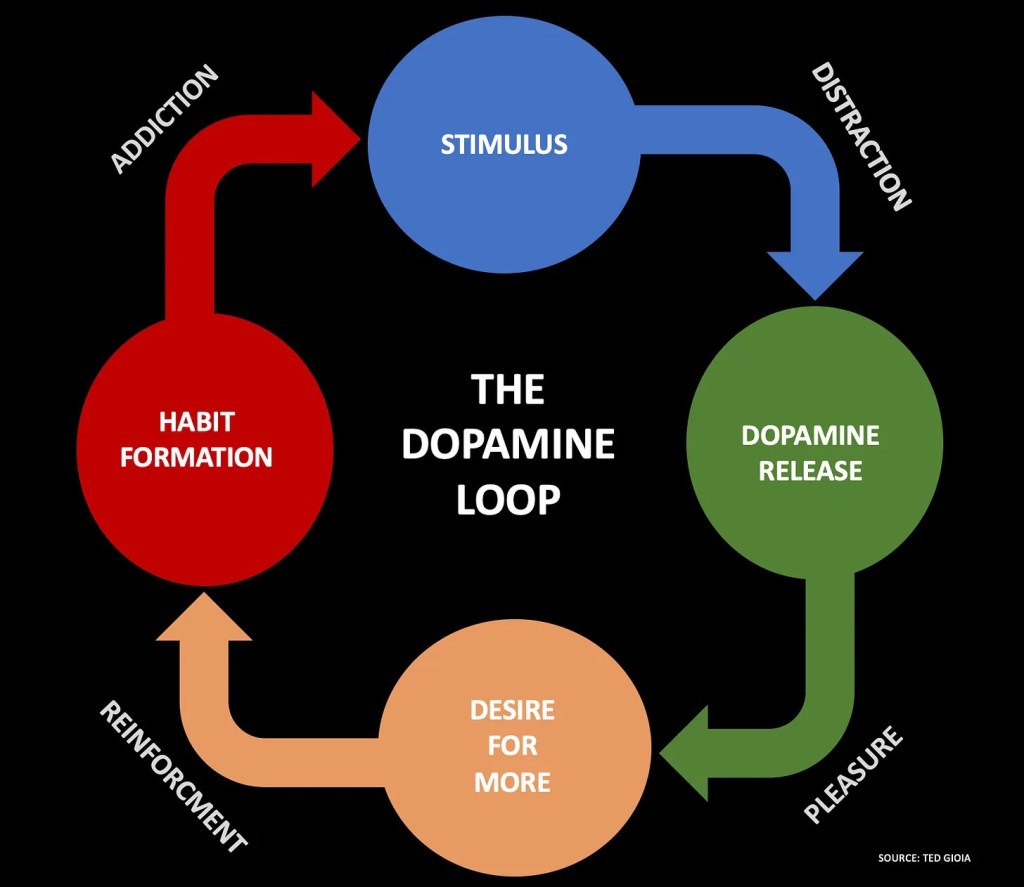
Dopamine is the most important neurotransmitter in the conversation about motivation. Dopamine is our goal-setting, reward-protected action-potentiating best friend.
Dopamine anticipates the feeling of making a million dollars and pushes you to go out and try to make it.
The brain essentially responds to small wins and tiny habits that create feedback loops. For instance, I win my first $10,000, I am then motivated via the feedback loop to aim for $50 or $100,000.
The best way to hack our neurobiology in this sense is to break goals into micro-goals that will ultimately trigger those dopamine surges.
I will give you an example of mine. I write down 5-10 goals per year. One of them was growing my glutes, I broke it down into monthly, weekly and daily steps.
Having something to look forward to at the gym was awesome, reaching that goal was even more amazing!
Reaching that goal was full of dopamine spikes, feeling a pull towards my goals mixed into the ultimate quest for gains: food and lifting heavy.
The Neuroscience of Willpower

Willpower is a limited resource, welcome to the concept of ego depletion. Using a lot of willpower on one task can make it harder to stay disciplined or focused on the next.
To solve this limitation are the concepts of motivation and mindset which can influence how much you “run out” of willpower.
Other factors that affect motivation include the environment, decision fatigue, and energy levels. Also analysis paralysis aka having too many options might make you opt out of choosing altogether.
Here are a few psychological tricks to conserve willpower: automation, routines and environment design. Let’s go over them!

Automation: You can set things up to happen automatically (ie: you schedule your workouts or meal prep).
Routines: You can create consistent daily patterns so healthy behaviors become natural. For instance, having coffee right before your workout or cooking a healthy meal while watching your favorite show.
Environment design: You can arrange your surroundings to make the right choices easy and the wrong ones harder. For instance, throwing away your chips and chocolate and leaving your training shoes near the door.
Mindset Shifts That Ignite Motivation
As per any discussion about motivation, the idea of mindset always takes precedent. What is mindset and why is it important?
Mindset refers to the your mental framework or perspective. It is responsible for every successful person’s achievements as it enables them to develop the right outlook to remain consistent and passionate throughout their journeys.
Mindset affects our ability to deal with challenges and setbacks. Plainly said, mindset doesn’t give us different circumstances but allows us to develop resilience to them which can ultimately change our circumstances.
Carol Dweck, author of the book Mindset (which I have written about here and here) shares two types of mindsets that people can have: a growth or a fixed mindset.

A growth mindset allows people to learn and grow their skill set whereas a fixed mindset attaches success to genetics or innate talent (both of which are wrong or at least counterproductive).
Having a growth mindset allows us to learn and grow whereas a fixed mindset keeps us internalizing and internalizing our failures instead of growing from them.
Failure, from the perspective of a growth mindset, is feedback and not defeat. Failure, with the correct mindset, can be reframed into a lesson and an opportunity to grow.
As part of attaining success, visualization and mental rehearsal to strengthen motivation pathways.
Biohacks to Supercharge Motivation
Morning Routines That Set Your Brain on Fire
Here are some awesome bio-hacked morning routines for you to boost your motivation and hack your way out of a low mood or motivated state!
Light exposure is crucial towards hacking your circadian rhythm to boost your energy. It also boosts serotonin in the body which increases feel food hormones and your ability to feel happiness.

Cold exposure and contrast showers can also increase alertness. Cold showers improve circulation, reduce inflammation, boost mood, and strengthen immunity, they also boost dopamine!
Contrast showers, which describes alternating hot and cold, enhance recovery, stimulate blood flow, and increase our energy.
Journaling and intention setting can also prime your mind for success. Simply writing down 5 things to be grateful for can truly work wonders for our mental health, abundance and ultimately lives.
Nutrition and Supplements for Mental Drive
Mental drive is largely dependent on nutrition and aka how well nourished our bodies are. It is therefore imperative that you consume a high-protein breakfast & maintain stable blood sugar levels. This will give you consistent energy.
Certain nootropics can help facilitate this process, in particular, natural compounds such as caffeine, L-theanine and adaptogens that can improve focus.
Hydration also plays an underrated role in motivation and cognitive function. Make sure to drink a lot of water!
Movement as Motivation Fuel
Exercise is a dopamine, serotonin, and endorphin booster. Boosting these neurotransmitters results in increased motivation which ultimately improves performance.
To improve our fitness performance, short priming workouts can trigger a productive mindset.
For instance, performing three sets of squats and body weight bridges can improve your ability to lift heavy on both lifts during your workout.
I recommend strength training and HIIT for improved energy and confidence. Both of these forms of exercise and activity not only challenge you but can boost fat loss, muscle gain and overall body transformation at a fast rate.
Sleep Optimization for Consistent Drive

Deep sleep is the best motivation reset. Sleep deprivation quite literally sucks the life out of you and puts you on survival mode.
How can we boost sleep and reap its awesome effects? Cold temperature, removing light and being in total darkness, not using your phone or any blue light as well as having relaxing pre-bed routines.
You can avoid decision fatigue by planning the day before you sleep. From the outfits that you wear to the details of your day, preemptive organization allows for better productivity and focus.
Environment Engineering
You can declutter, design, and cue your environment for motivation. Check out my previous post on habit formation to understand how to effective pairing a routine task to a new habit is for success.
A similar concept is temptation bundling which refers to pairing an enjoyable activity with productive tasks.
Here are 10 Digital detox hacks to reduce attention fatigue:
- Set screen-free windows: for instance, the first hour after waking and the last hour before bed should not involve a phone.
- Use app timers: limit social media to 30–45 minutes per day to prevent endless scrolling.
- Batch notifications: turn off your push alerts and check messages at set times instead of constantly.
- Create no-phone zones: for instance, make dining table, gym floor, or bedrooms places where you do not use your phone.
- Replace micro-scrolling with micro-breaks: when you’d normally grab your phone, take 10 deep breaths, stretch, or walk.
- Switch to grayscale mode: dull colors reduce dopamine spikes and make your phone less addictive.
- Single-task, don’t multi-task: keep only one tab/app open when working.
- Physical separation: keep your phone in another room during deep work or conversations.
- Curate your feed: unfollow accounts that drain you; follow those that uplift, inspire, or teach.
- Swap digital with analog: carry a book, notebook, or printout so you reach for that instead of your phone.
The Science of Micro-Goals and Habit Stacking

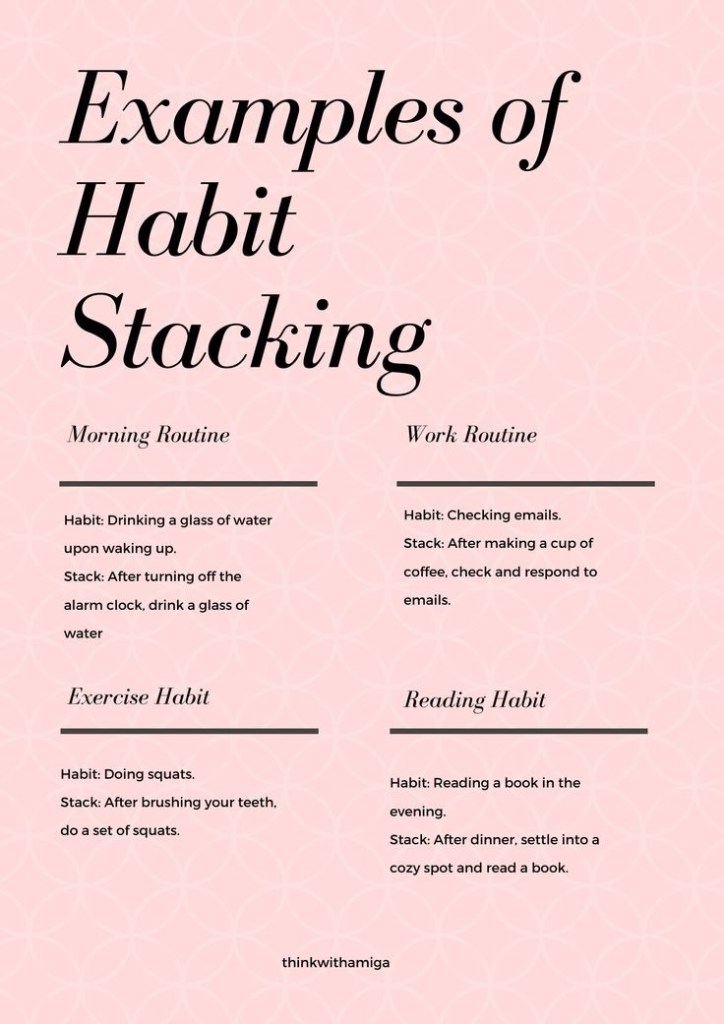
Large goals will always fail without micro-steps. Habit stacking involve linking new habits to existing routines.
For example, having a post-gym protein shake while journaling 3 things to be grateful for/planning the next day is a great habit stack (it combines three life-improving habits).
You need to always measure your progress for continuous dopamine-driven reinforcement. A journal is a great place to start.
Psychological Triggers to Maintain Momentum
Social Accountability
Holding yourself accountable socially is an excellent way to maintain and improve your chances of success.
Good examples are joining group fitness classes, online communities, or having a training partner. Making a public commitment is also excellent for sustained action.
For instance, sharing your progress or showcasing your transformation on your Instagram stories or feed is an excellent way of keeping that commitment you made to yourself.
Storytelling and Identity Reinforcement
This tip is fundamental towards creating new habits and this is, tying your sense of identity to your habit. This simple tip in the framework of motivation sounds like an internal dialogue of “I am someone who…,” instead of “I want to…”.
This mental shift is very effective in persuading us to adopt our new habits. Furthermore, creating narratives that reinforce progress and consistency also help us stay more motivated.
For instance, celebrating our wins and viewing showing up as proof of our commitment can recalibrate any old narrative or fear based mindsets.
Gamification and Reward Systems
Methods like using tracking streaks, points or badges are super effective in boosting dopamine and therefore motivation.
Small, frequent rewards allows us to receive micro-doses of dopamine vs. delayed gratification which gives it all to us when we finish our task.
Emotional Anchoring
This concept refers to linking our motivation to emotional highs (for instance: feelings like pride, gratitude and excitement).
Visualization is also an excellent way of anchoring emotions to action via the process of transmutation.
Common Motivation Killers and How to Combat Them
Below are four motivation killers and ways to combat them.
Procrastination:
In order to combat procrastination, try breaking down your tasks into tiny actionable steps.

Overwhelm:
To stop being overwhelmed, use “one thing at a time” and micro-habits. Smaller habits make your tasks either to achieve and can allow for better consistency.
Negative self-talk:
To eliminate negative self-talk, reframe and replace limiting beliefs with more optimistic strength-oriented ones.
Energy depletion:
Rest, nutrition, and mindful breaks are good methods of dealing with energy depletion.
Putting It All Together: A 7-Day Motivation Blueprint
Morning: Start Strong
Get sunlight (5–15 min): Wake up your body, regulate your circadian rhythm, and boost your mood.
Journal (5–10 min): Write 3 things you’re grateful for and 1 intention or micro-goal for the day.
Hydrate & activate: Drink water with lemon, take a 1–2 min cold shower, and move your body for 10–20 min (stretching, mobility, or light resistance work).
Midday: Build Momentum
Focus on micro-goals: Break tasks into small, achievable actions; 20–45 min sprints work well.
Eat and move: Have a protein-rich snack or lunch, then take a short walk to stay energized.

Celebrate small wins: Acknowledge your progress to reinforce motivation and dopamine.
Evening: Reset & Reflect
Light movement: Stretch, walk, or do gentle mobility work to release tension.
Digital detox: Spend 30–60 min offline: read, create, or relax.

Evening journaling: Note 3 things that went well, 1 lesson learned, and 1 micro-goal for tomorrow.
Sleep prep: Dim lights, avoid caffeine late, and try relaxing breathwork before bed.
Daily Focus Tips
Consistency matters: Morning and evening journaling and movement form the foundation.
Micro-goals compound: Even small wins add up over time.
Biohacks support focus and sleep: Light, movement, and digital breaks improve energy and clarity.
Conclusion
Motivation is a science, an art, and a habit that biohacks and psychology can improve. You don’t need to wait for inspiration, you can create it at any moment.
I encourage you, my readers to pick 1–2 hacks today and experiment with them. Your brain and body are ready, you just need to show up!
I hope that you enjoyed this blog post on Motivation, Mindset, and Biohacks for Daily Success, please let me know what you thought about it in the comments section below!

 Taras Fit World
Wow, I genuinely loved reading this—it spoke to me in such a deep way. You’ve truly got a gift ❤️ Excited to read more from you!
LikeLiked by 1 person
Thank you! I’m glad you enjoyed reading it ❤️
LikeLiked by 1 person
What a good read! Forming habits is so important to success in pretty much everything, but it took me far too long to realize it also applied to my health & fitness goals. Thanks for the reminder. 🙂
LikeLiked by 1 person
Thank you, I’m glad you enjoyed it! 😊 Yes, habit formation certainly is a universal concept that can apply to any area of our lives. Hope you have a great one!
LikeLiked by 1 person