
Hey loves,
Did you know that studies show that weightlifters perform better on memory and focus tests than their sedentary peers do?
This goes against the popular expression that weightlifters’ or bodybuilder’s brains went to their muscles.
This common trope and stereotype couldn’t be further from the truth, weight lifters are in fact sharper and more cognitively enhanced than their sedentary counterparts.
How many people do you know that suffer from cognitive decline, stress or brain fog? These are such common and widespread modern struggles that people often turn to caffeine, stimulants or other forms of drugs for relief.
This blog post will explore the science-backed link between resistance training and brain function, and how readers can apply it.
If you haven’t already, check out my blog post on the basal ganglia and motivation, a link that disproves the common trope of a brainless bodybuilder.

Understanding Cognition and Its Challenges
First of all, what is cognition? Cognition refers to our memory, attention, processing speed and executive function.
Modern challenges to our cognition and ability to access the aforementioned faculties are a sedentary lifestyle, chronic stress, poor sleep and digital overload.
The consequences of these bad lifestyle choices are reduced productivity, brain fog and early cognitive decline.
The answer to fixing these issues is exercise, weightlifting in particular.
The Science Behind Resistance Training and the Brain

The science between resistance training and the brain are multifaceted with lifting weights increasing neurotrophic factors.
Lifting weights increases BDNF (Brain-Derived Neurotrophic Factor) and IGF-1 in particular.
It also increased cerebral blood flow which describes an enhancement of oxygen and nutrient delivery to the brain.
Neuroplasticity is the brain’s ability to form new neural connections and thereby change its structure.
Weightlifting therefore stimulates new neural connections and strengthens synaptic pathways.
Exercises also affects hormones. Testosterone, growth hormone, and cortisol are regulated and are linked to focus and mood.
Studies by Yoon et al. (2018) have demonstrated that high-speed resistance exercise training significantly enhances cognitive functions, including processing speed and executive function, in older adults with cognitive frailty.
How Lifting Weights Enhances Specific Cognitive Functions

Lifting weights improves memory.
Strength training improves both short-term and long-term memory through several mechanisms, including increased levels of neurotrophic factors like IGF-1 and BDNF, reduced inflammation, and enhanced neuroplasticity.
Studies by Griebler et al. (2025) show that even a single session can boost short-term memory, while systematic reviews like Wu et al. (2021) demonstrate that regular resistance training over time improves working and long-term memory.
Animal studies also support these effects, linking strength training to hippocampal neurogenesis and better memory performance (Mendelski et al., 2024).
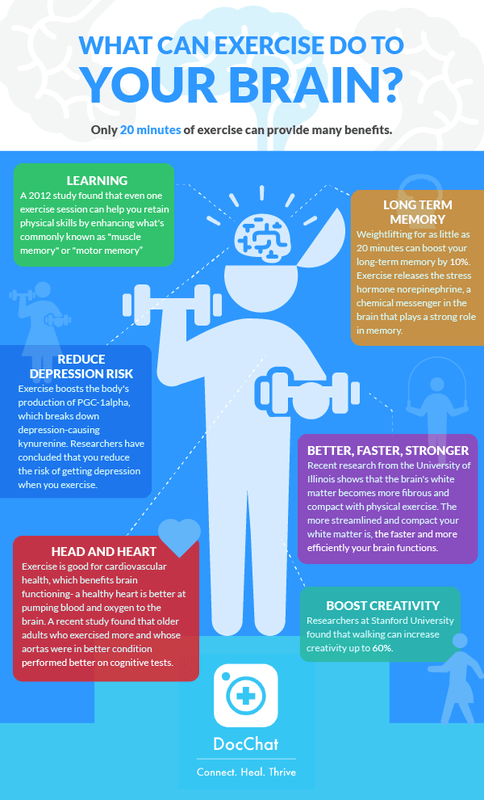
Focus & attention are also processes affected positively by exercise. Lifting weights in particular strengthens neural pathways for executive function.
Our executive function skills are mainly related to organization, planning, goal-setting and time management. It is no wonder why this area is also referred to as the CEO of our brains.
Problem-solving and decision-making, important skills for mental resilience are linked to complex lifts that utilize the concept of progressive overload.
Finally, mood and mental clarity are improved as a results of lifting weights. Weightlifting reduces stress, anxiety, and mental fatigue which indirectly improves cognition.

The Best Types of Resistance Training for Cognitive Benefits

The benefits of resistance training on cognition are clear, what type of training is optimal to receive those neural benefits?
Does one particular mode of training surpass the other? Simply, the one that elicits the most muscle recruitment yields the greatest benefits.
How does one recruit more muscles? Free weights requires more engagement, you don’t have a machine simplifying the movement, shortening the range of motion or even holding your core still.
This extra recruitment means that using free weights such as dumbbells, barbells or heavy bands will lead to improved cognitive benefits.
Compound movements such as squats, deadlifts, presses also elicit an effective neural stimulus with full-body lifts maximizing brain activation.
Progressive overload (the process of getting stronger over time via increased load, intensity and resistance) yields greater cognitive benefits as well.
Evidence-based recommendations for brain health are 2–4 strength training sessions per week for 30–60 min each.
Integrating Weightlifting into a Brain-Boosting Lifestyle

Despite the effectiveness of resistance training for cognitive benefits, you must pair it with cardio. The synergistic effects affect vascular and cognitive health.
Blood gets pumped to your heart faster and your focus as well neurotransmitters (such as dopamine, serotonin and endorphins) are positively affected.
Supplements can help optimize your healthy lifestyle and yield more cognitive benefits. Protein, omega-3s and antioxidants fuel the brain for recovery and growth.
Additionally, sleep amplifies neuroplasticity which is your brain’s ability to create neural pathways. The combination of lifting and rest lead to optimal brain gains.
Furthermore, the mind-muscle connection also effectively enhances neural engagement with focused, intentional lifting enhancing neural engagement.
Case Study & Real-Life Examples
Rania’s Exam Breakthrough

Rania, a university student, was preparing for her final exams and felt her brain was overloaded. A friend convinced her to join the gym and lift weights a few times a week.
She realized that strength training became her reset button: after a workout, studying felt easier, and she retained more information. She ended the semester with her highest grades yet and now swears by training as much for her mind as for her body.
Practical Takeaways & Step-by-Step Guide
Here are some actionable tips that you can implement in order to reap the maximum amount of cognitive health benefits:
- Schedule 2–4 lifting sessions a week.
- Focus on compound lifts.
- Track progression.
- Pair with protein-rich meals and hydration.
- Prioritize 7–9 hours of sleep.
- Emphasize consistency over intensity for cognitive benefits.
Conclusion
In conclusion, weightlifting is not just for aesthetics, it’s a tool to sharpen your mind.
I encourage you, my readers to view strength training as a brain-enhancing lifestyle habit.
Try a 4-week strength routine and observe the changes it has in your focus, mood, and memory.
I hope that you enjoyed this blog post on Strength for the Mind: How Lifting Weights Boosts Your Cognition, please let me know what you thought about it in the comments section below!

 Taras Fit World
One Comment Add yours