Hey loves,
Today’s conversation is on strength, softness, sexism, and soul.
Many women have this unspoken fear of losing their softness if they get strong. They are shamed into shrinking, submitting and not having a voice of their own.
Some women don’t even get to choose whether or not to train, it’s already decided, it’s a masculine endeavor, they’ll get shamed, let’s rob our lifespans of 10-20 years because of this fear.
It is so sad. To worsen this is the masculinization of fitness and the way it was twisted and distorted to fit a masculinity framework. The masculine energy thrives off this space.
In it is the glamorization of the grind, pushing, pain, and domination. Discipline is needed and one must always be working towards a new goal.
The question then becomes, can strength and softness coexist? Or does one dominate the other? My experience is that both can coexist with no sound reason why one would take the wheel.
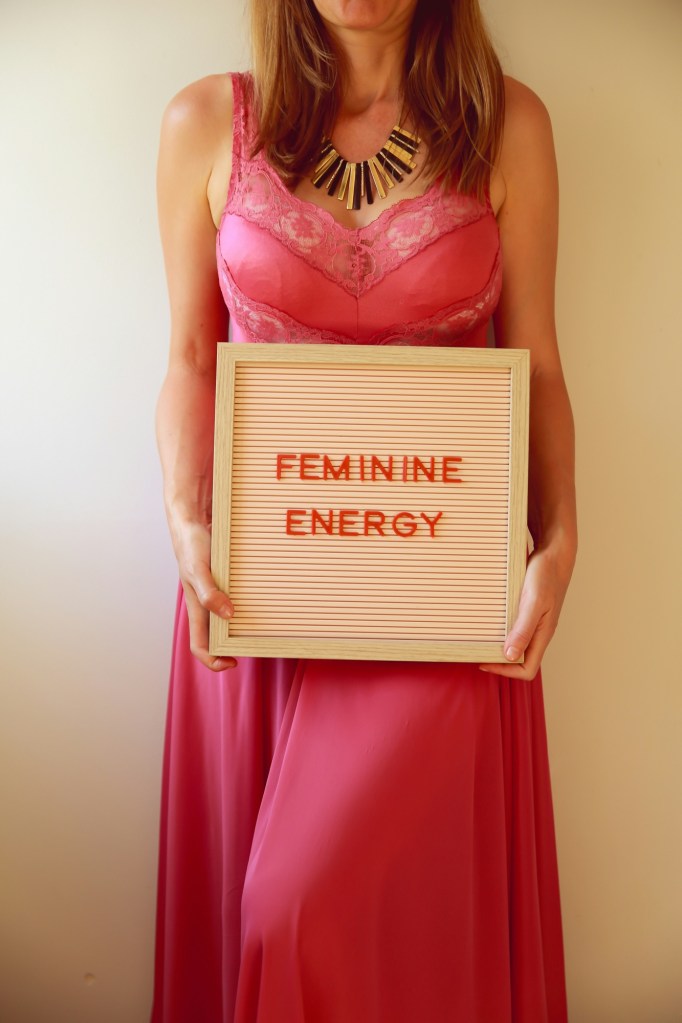
This post explores how feminine and masculine energies show up in our fitness journeys, not as strict or rigid gender roles, but as forces we can harness to build a body, life, and identity that’s strong, beautiful, and whole.

UNDERSTANDING ENERGY BEYOND GENDER
Let us start by defining what feminine and masculine energies are. The masculine energy is built on structure, action, direction and intensity.
These themes are easily seen in fitness supplement or gym ads or spaces that promote health and losing weight.
The feminine, on the other hand, relies on intuition, flow, receptivity and sensuality.
Both energies exist in everyone, regardless of their gender. One of the biggest mistake people make in regards to the feminine/masculine discourse is that energy is in any way correlated to gender.
A man can embody feminine energy and a woman can embody a masculine energy. She can be career-focused and ambitious whereas he may be more feminine and laid back in his pursuits, should he choose to have them.
To clarify, a woman isn’t more “feminine” if she avoids the gym entirely. Lack of representation fills in the gaps in our consciousness’ perception of gender.
Gyms are designed for men: this is from the music, the setup, the music and the advertisements or targeting ads.
Women therefore enter a male space, to conform to the male gaze or to rebel against it is the unspoken social context.
A woman not entering a space designed for men does not make her more feminine than a woman who enters it daily. They are simply adapting to their environments and can choose to shift out of their energies easily.
A woman lifting heavy archetypically is represented in movies, the female warrior, Xena the warrior princess.
She is depicted in a one-dimensional way and unfortunately it tends to be as a little man, embodying the same energy, aspirational makeup and characteristics of a man.
“As exercise physiologist Dr. Stacy Sims says, ‘Women are not small men.’ We have different hormonal rhythms, different energy cycles, and we need training that respects that- not flattens it.”
Let’s understand energy through the lens of fitness and sports. Masculine energy is very cerebral, strategic, it is oriented towards programming, progressive overload and chasing goals.
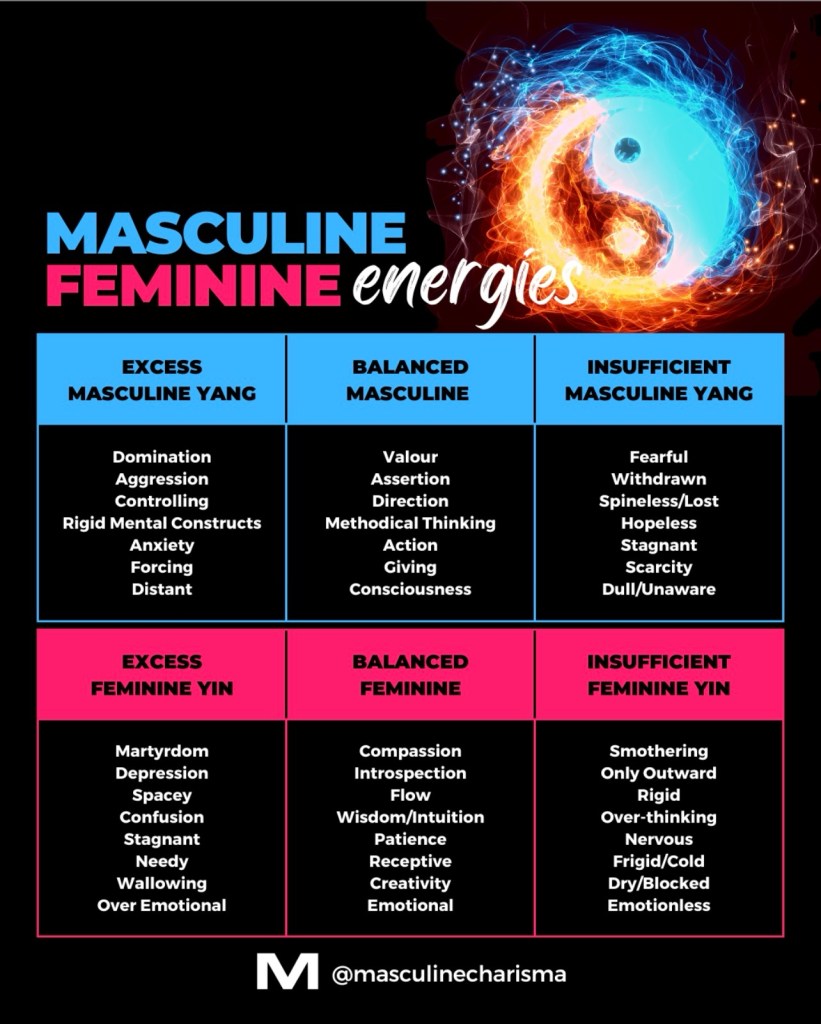
Feminine energy is intuitive, it’s fluid, it’s in breath work, yoga, mobility dancing and recovery.
Both of these energies can merge together to build us our dream bodies.
Check out my Instagram post on how to incorporate feminine energy into our training sessions:
What about representing different archetypes in fitness? Athleisure brands are doing just that, take a look at Bombshell sportswear.
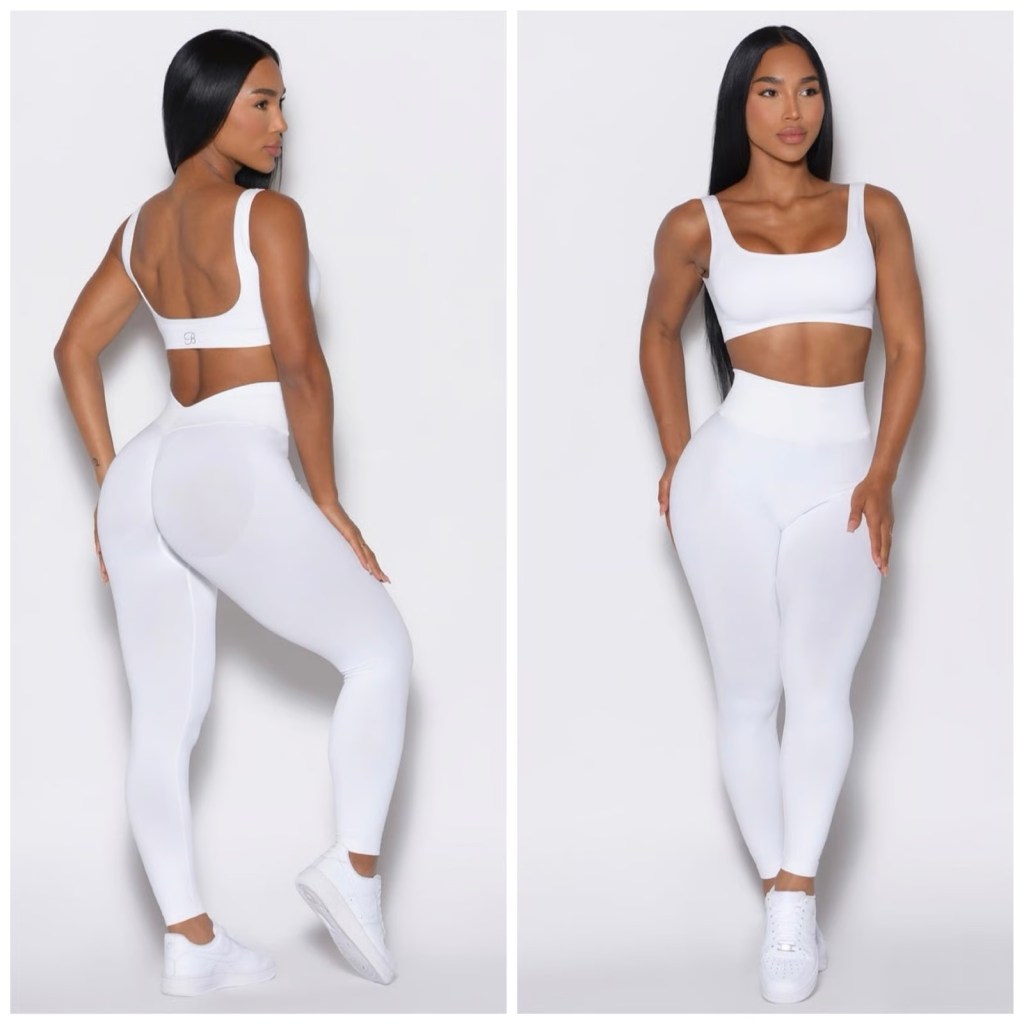
This luxury sports brand uses the Bombshell archetype which is rooted in classic femininity, glamour, and powerful confidence.
They use fitness models who are curvy or bodybuilders with more hourglass shaped bodies in their advertisements.
Think of the “blonde bombshell” or a modern hourglass silhouette turned up in activewear style.

I love that and while it does sexualize women a bit more and brings us to that sex object/male gaze space, it at least gets women training and getting healthy, in $80 leggings.
Another athleisure brand pushing female consciousness forward into breaking free from the health matrix (aka:muscles are bad, Pilates is the only way for women) is Gym Shark.
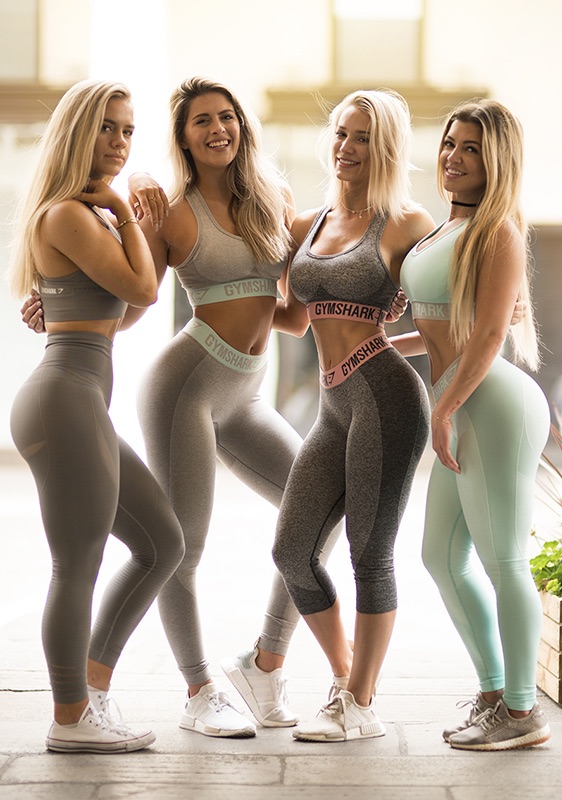
Gym Shark uses the empowered heroine or every day warrior archetype and I think that’s helping women a lot!
From fearing to take up space to powerful messaging giving us value in these spaces, what a powerful shift in fitness this brand has given women.
THE PROBLEM: SEXISM AND FITNESS CULTURE

Historical Roots:
Fitness spaces, as I mentioned, were designed for men, and women were told strength was “unladylike”.
Myths permeated discourse about being “toned but not bulky”. Femininity was confined to aesthetics, not performance.

I notice how in the Middle East, men like the results of training (the glutes, the curves) but don’t like seeing the process.
Their consciousness about fitness is still relatively in the dark with only some men truly embodying the healthy masculine energy required to hold an empowered woman.
There is something about women loading up their own weights, taking up space and being expansive that troubles some of the men.
I didn’t say all of them, a lot are super sweet and offer women help. A lot, you can sense, feel a bit of disgust, disdain and maybe envy about the process.
So what are women supposed to do to live longer, have their hourglass shape and escape the matrix of cardio and starvation?
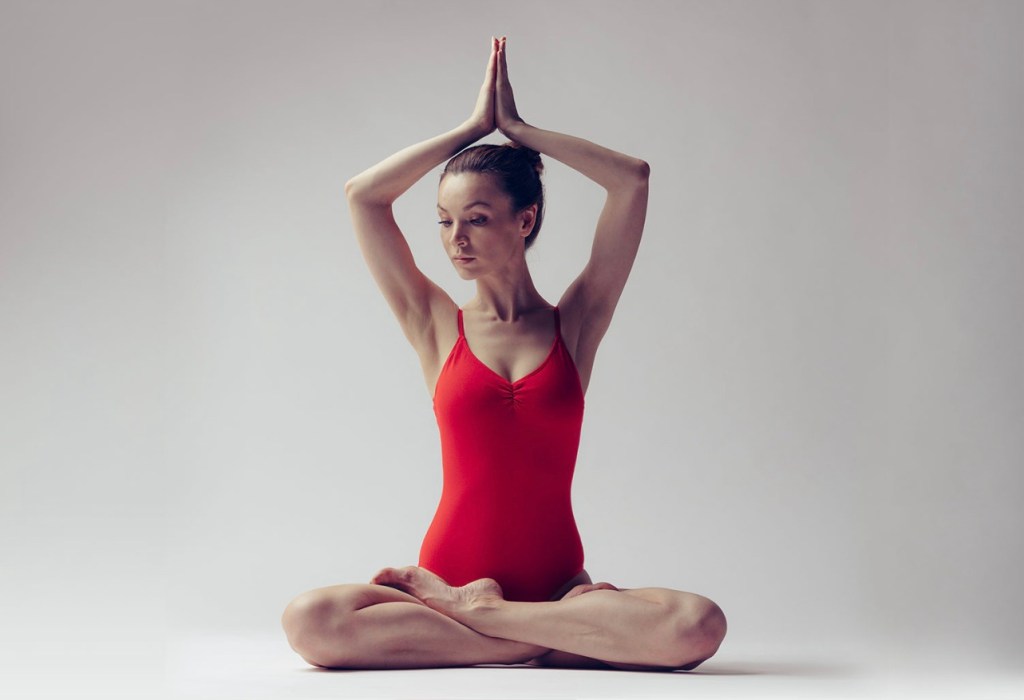
Let’s see how our fears dictate us to unlearn them. Women are afraid to lift heavy, they are over-sexualized while training (I started filming from the front, with unflattering angles to avoid being sexualized).
Trainers also push male-centric training styles onto women without taking into consideration their feminine essence, hormonal or energy cycles.
I don’t like to blame people but a lot of men pushed me into developing a physique I myself felt was too masculine.
The consequence of a male-dominated space and energetic structure on women’s systems is burnout, hormonal imbalances and a disconnection from self and sensuality.
“Studies show that women are more prone to overtraining injuries- not because we’re weaker, but because we’re told to ignore our bodies’ cues in favor of pushing harder [Kjaer, 2014].”
Burnout is something that can carry serious consequences on both our energetic and physical systems.
Furthermore, being too much in our masculine can quite literally rob us of both being with masculine men (who enjoy the polarity) and literally from receiving (who doesn’t want to soften up and receive?)
“When we train without rest or intuition, we risk pushing the body into chronic stress — disrupting not just recovery but our mood, hormones, and nervous system [Thayer & Lane, 2000].”
THE SOLUTION: INTEGRATING BOTH ENERGIES
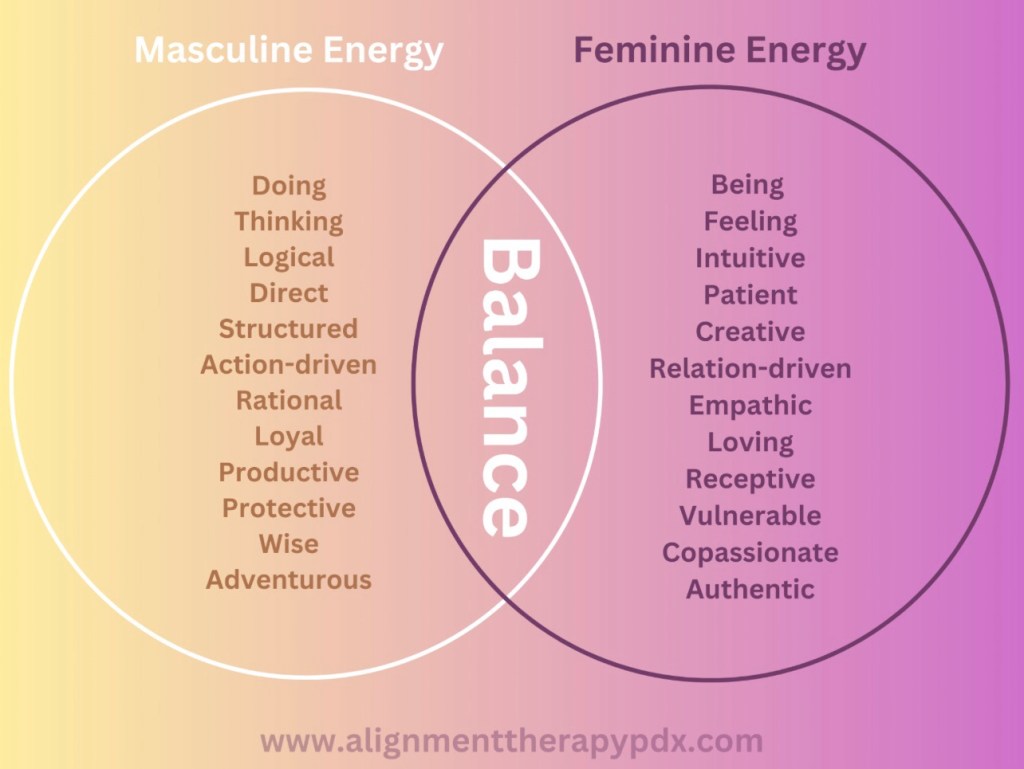
How to Balance the Two in Training:
Plan your workouts with masculine structure and feminine intuition. Train hard but honor your rest, your emotions, and your cycles.
An example of this would be lifting during your follicular phase (masculine) and having your recovery during your luteal phase (feminine).
“Emerging research shows that women are naturally stronger and recover faster during the follicular phase of their cycle when estrogen is rising, making it the perfect time to embrace masculine intensity in training [McNulty et al., 2020].”
Mindset Shifts:
Strength is not the opposite of softness. Showcasing strength doesn’t take away from your essence and knowing how to integrate both is a gift to truly becoming your best self.
“We’ve been conditioned to view athleticism and femininity as opposites- an impossible binary that leaves women asking, ‘Can I be strong and still be beautiful?’ [Krane, 2001].”
Limiting yourself, closing yourself off to experiences or confining yourself to “soft girl” is essentially putting a wall around certain parts of your soul.
Feminine energy doesn’t fear power, it channels it differently. Feminine energy is also, as mentioned earlier, something you can incorporate into your workouts.

I remember a female influencer on TikTok saying that Pilates is a feminine sport and lifting weights is masculine. It is precisely the breathing, slowing down and being intentional with your training that can make lifting weights more of that sensual experience.
I’m so sorry to say this but Pilates will never give you a Kim Kardashian, curvy hourglass shape that lifting weights can. Your body simply doesn’t have enough stimulus to grow to those proportions.
Real feminine energy is magnetic, embodied, and whole: not submissive or passive. It is life affirming but also life destroying, it can be feral, wild and cause chaos.
Femininity isn’t the packaged Instagram aesthetic energy, it is wild, rampant, a force to be reckoned with.
I used to overtrain, reject rest and was so much into my masculine “doing” and “proving” energy for years. I hated it.
I started by incorporating one day of feminine “being” energy just to reconnect to that part of myself.

I then fell in love with life again, I became more submissive in relationships because I healed that wound that lifting weights used to numb.
With prayer, deep faith and introspection, I transmuted all my energy to healing and have made peace with my feminine, even using it to manifest and bring good into my life.
If you are into manifestation, I recommend transmuting your feminine energy (located 1cm below your bellybutton) to gratitude to attract more abundance into your life.
THE BEAUTY OF FEMININE STRENGTH

Femininity is power, not weakness. Now, on the other hand, exist women who hate femininity and think it is a submissive “pick me” school of thought.
They could not be more wrong. Femininity is that intuitive shift felt among queens that later convince their king not to follow through with that business decision that would have ended that empire.
The body is both a weapon and a work of art but don’t forget the first part. While carving out your dream body whether that is through strength training or Pilates (hopefully it’s the first one), remember how powerful your body can truly be.

Lean in to your strength potential aka: how you can defend yourself (if needed), how your 70 year old self can carry things without breaking a hip and how to remain independent for as long as possible.
The feminine body doesn’t need to be minimized, it’s meant to take up space. Furthermore, after you achieve your dream physique, you can reconnect to your sensuality with stretching, dancing or walking.
“Feminine movement like dance or fluid stretching doesn’t just feel good- it’s scientifically shown to reduce cortisol and promote emotional regulation [Quiroga Murcia et al., 2010].”
You can incorporate sensuality into your training by working out to feel instead of only to look a certain way.
When we connect to our bodies this way, results come easier. I always say to my clients that you don’t have to force an exercise that doesn’t feel good to you on your body, you can always find some type of exercise that you enjoy doing.
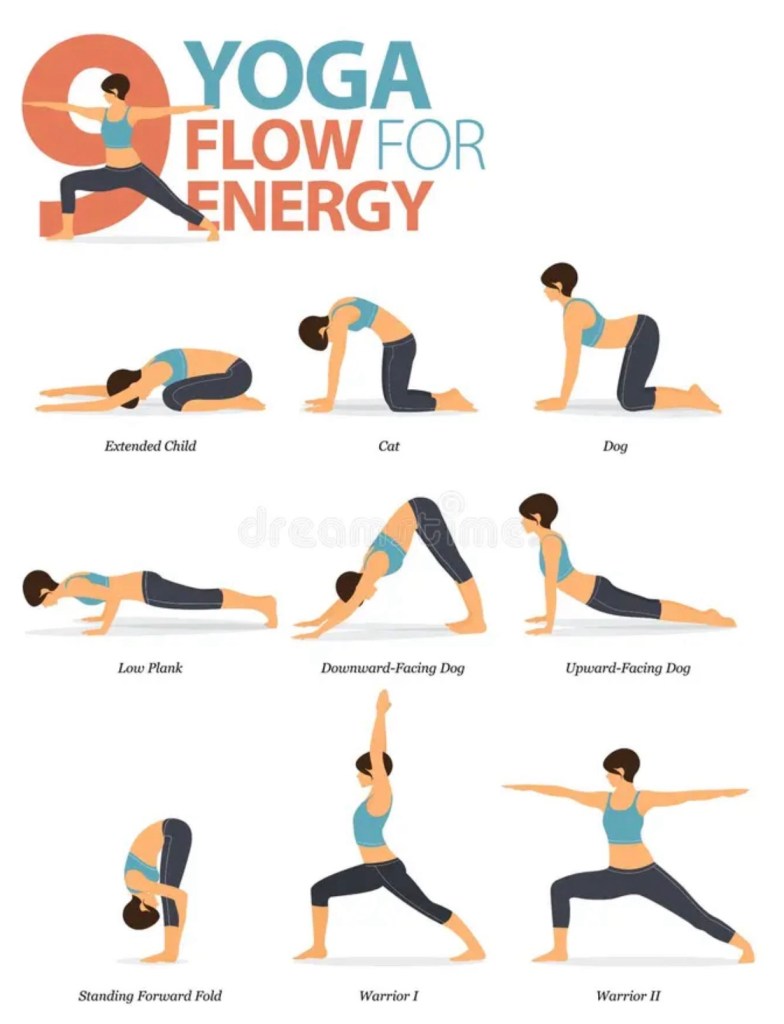
THE CALL TO ACTION
We, as women, have to stop asking permission to be strong. We need to start embracing the rhythm of our bodies.
Feminine energy is not a weakness, it’s your secret weapon. It’s an underrepresented, undervalued but truly powerful dimension of the human experience.
Look at plants, look at how little they have to do yet they outlive the person rushing to work and crashing his car or the impulsive person trying to rush a bad business deal.
The feminine energy is that plants’ rhythm, I suggest that you reconnect to it, embedded in its wisdom are the key to our survival.
Content creators and influencers need to start challenging traditional models of success. We need to make space for intuition, softness, and flow.
Fitness must evolve or we’ll keep losing women to burnout and body shame. You really don’t have to choose between biceps and beauty, between being powerful and being soft.
You can be all of it and more.
I hope that you enjoyed this blog post on Balancing Masculine and Feminine Energy in Fitness, please let me know what you thought about it in the comments section below!
Sources:
Krane, V. (2001). “We can be athletic and feminine, but do we want to? Challenging hegemonic femininity in women’s sport.” Quest.
McNulty, K.L., et al. (2020). “Menstrual cycle phase and performance: a systematic review and meta-analysis.” Sports Medicine.
Quiroga Murcia, J.A., et al. (2010). “Emotional and neurohumoral responses to dancing.” The Arts in Psychotherapy.
Thayer, J.F., & Lane, R.D. (2000). “A model of neurovisceral integration in emotion regulation and dysregulation.” Journal of Affective Disorders.

 Taras Fit World
One Comment Add yours