
Hey loves,
I hear this all the time from clients: “I’m just not built for strength or fat loss” or “my genetics suck! I don’t have the right genes to build muscle”.
They then commit to training without putting self-imposed limits (as per my request) and they achieve a physique beyond more impressive than what they initially thought was possible.
The most common question then finds itself being asked: “how much of what we know about fitness is lifestyle vs genetics?“ It is my belief that DNA merely sets the tone where lifestyle takes center stage.
Your DNA therefore isn’t your destiny, it is ultimately your choices that literally turn genes on or off.
In this blog post, you, my readers, will learn how to leverage epigenetics for strength, fat loss, recovery, and longevity.
Let’s start with a brief lesson on epigenetic mechanisms like methylation, histone modification, and microRNAs. These ideas will be simplified for you, don’t worry.
For starters, these three functions act as switches that determine how your DNA responds to lifestyle choices such as diet, exercise, stress, and sleep.
Epigenetics 101: The Science of Lifestyle and Genes
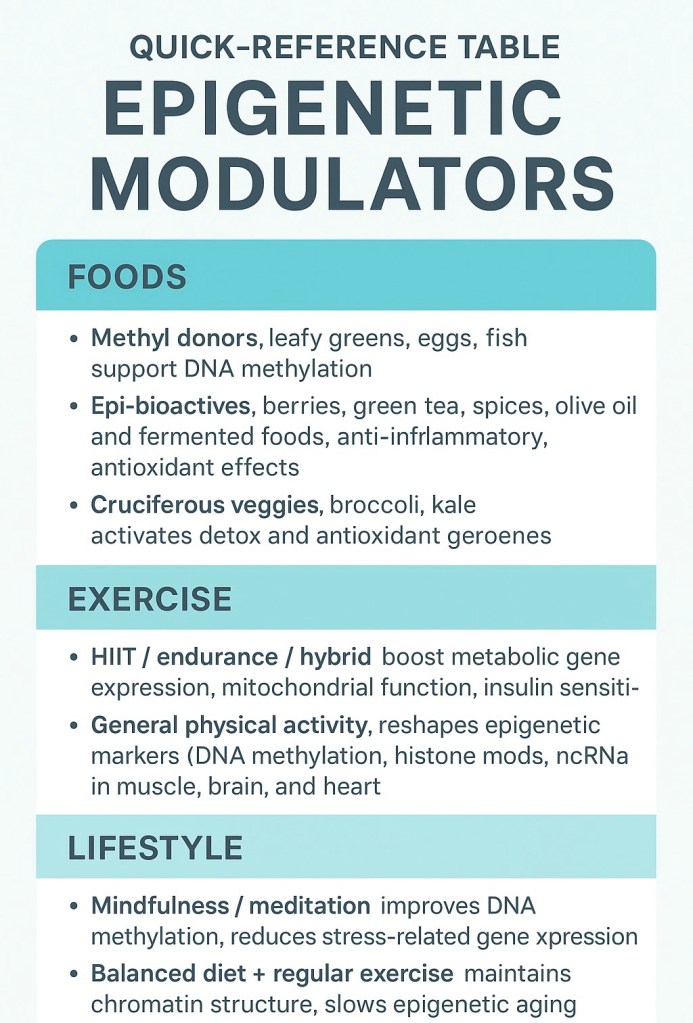
Epigenetics describes the difference between genes and gene expression. DNA methylation is the process of switching genes on and off.
Think of your DNA as a big recipe book. Methylation is like putting a sticky note on top of certain recipes saying, “Don’t cook this one right now.” The recipe (gene) is still there, but is now harder to read.
Histone modification defines gene accessibility. Simply, your DNA isn’t loose, it’s actually wrapped around little spool-like proteins called histones. If the DNA is wrapped too tightly, the cell can’t read the recipe inside.
Histone modifications are like adjusting the tension loosening the wrap to make genes easier to read, or tightening it to keep them quiet.
MicroRNAs are the gene silencers. These are tiny molecules that act like kitchen critics. When a recipe is copied (mRNA), microRNAs can come in and say, “Nope, we’re not using this copy,” blocking the cell from turning it into a protein.
Within the context of fitness, genes that influence muscle growth, fat storage, recovery, inflammation, and metabolism can be regulated.
As you can see, these mechanisms are important but not rigid, they can be adjusted and thereby impact gene expression.
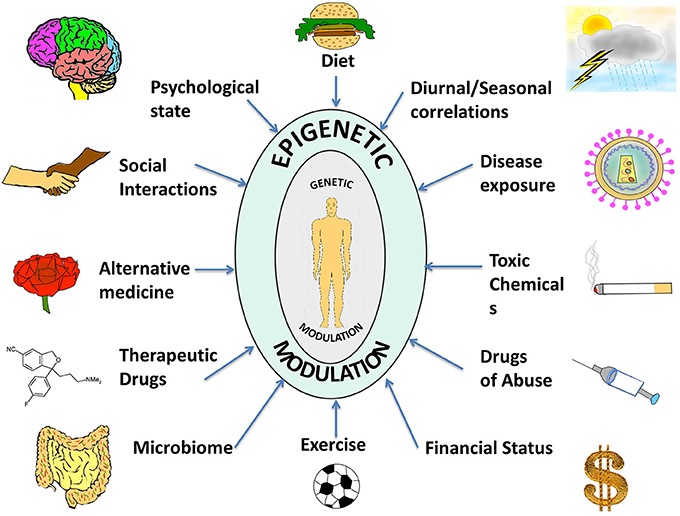
The study below shows the impact that exercise has on the process of DNA Methylation and how fundamental this will be to switching on the insulin (oIGF-1) or the muscle gain (Myostatinhealth/MSTN) switch in your body.
Study:
Exercise Alters Blood DNA Methylation & Boosts Strength
Study Overview: Middle-aged and older women undertook a 14-week combined aerobic and strength training program.
The Results:
Improved blood pressure, triglyceride levels, and muscle strength
More than 800 DNA methylation sites changed in blood, especially in promoter regions tied to metabolism (AMPK, insulin signaling)
Below are a list of fitness related genes if you would like to know them:
PGC-1α – boosts mitochondria (body’s cell powerhouses) and endurance
IGF-1 – promotes muscle growth and repair
Myostatin (MSTN) – limits muscle growth (turned down with training)
AMPK – helps burn fat and improve energy use
UCP1 – burns calories in brown fat for heat
IL-6 – helps muscles recover after exercise
Adiponectin – improves fat metabolism and insulin sensitivity
VEGF – helps grow new blood vessels for better oxygen delivery
BDNF – supports brain health and recovery after exercise
CPT1 – helps burn fat for energy during endurance training
Strength Training and Epigenetic Signals
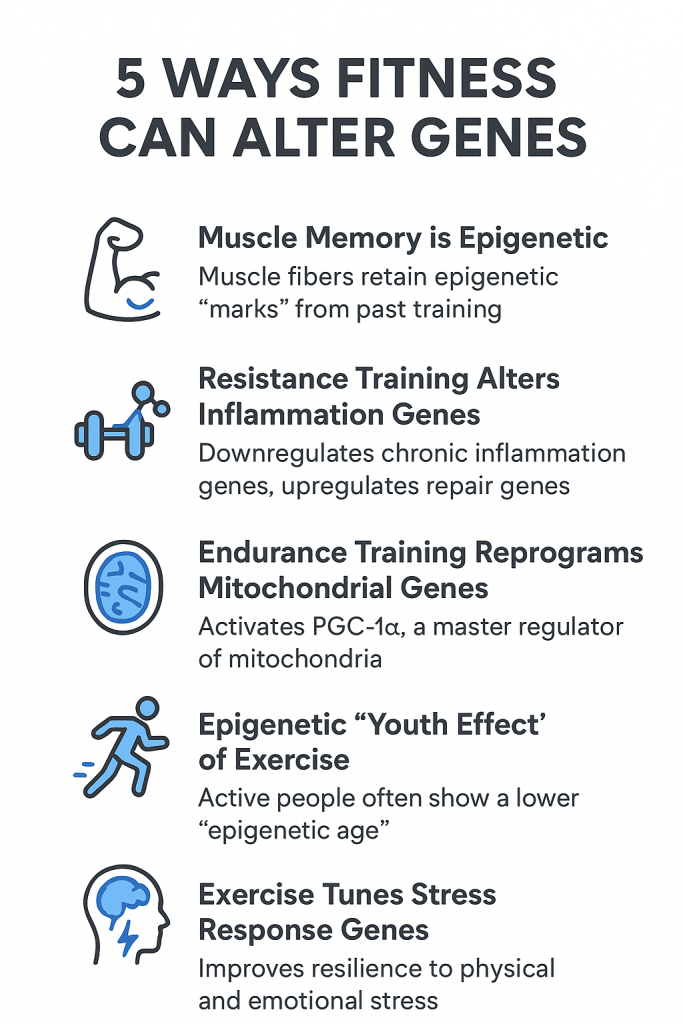
How Exercise Changes Gene Expression:
As you saw in the study posted above, resistance training can truly modify DNA methylation. Can strength training lead to other genes being altered?
Yes, it can activate your satellite cells which will remodel your muscle fibers.
Our bodies have two types of muscle fibers: one are slow-twitch muscle fibers (type 1) which are slow and steady and endurance-focused.
The other are fast twitch muscle fibers (type 2) which are fast and strong as well as power-focused.
They can be activated differently but both lead to muscle growth.
HIIT (high intensity interval training) can improve mitochondrial genes for endurance and fat metabolism.
This quite literally means that performing this type of cardio can make you more adept towards burning fat and better at performing cardio!
Epigenetic benefits vary with your workout type with resistance training changing insulin for instance and HIIT improving endurance and fat metabolism genes.
The point of this is, none of it is fixed, all can be altered meaning nobody can just “not have genes for running or muscle gain”.
They must commit to activating and altering these genes via the specific sport that it can affect.
Intensity, volume and frequency, the three pillars of progressive overload can all alter gene expression and how you ultimately benefit from your choice of sport.
A sedentary person can therefore transform muscle strength and metabolic health in months with strategic training.
An overweight person in an overweight family is not doomed to failure. In that particular case, distance from triggering family members and bad habits (ie: having unhealthy snacks in the house) can also help with better outcomes.
Nutrition and Epigenetic Fitness
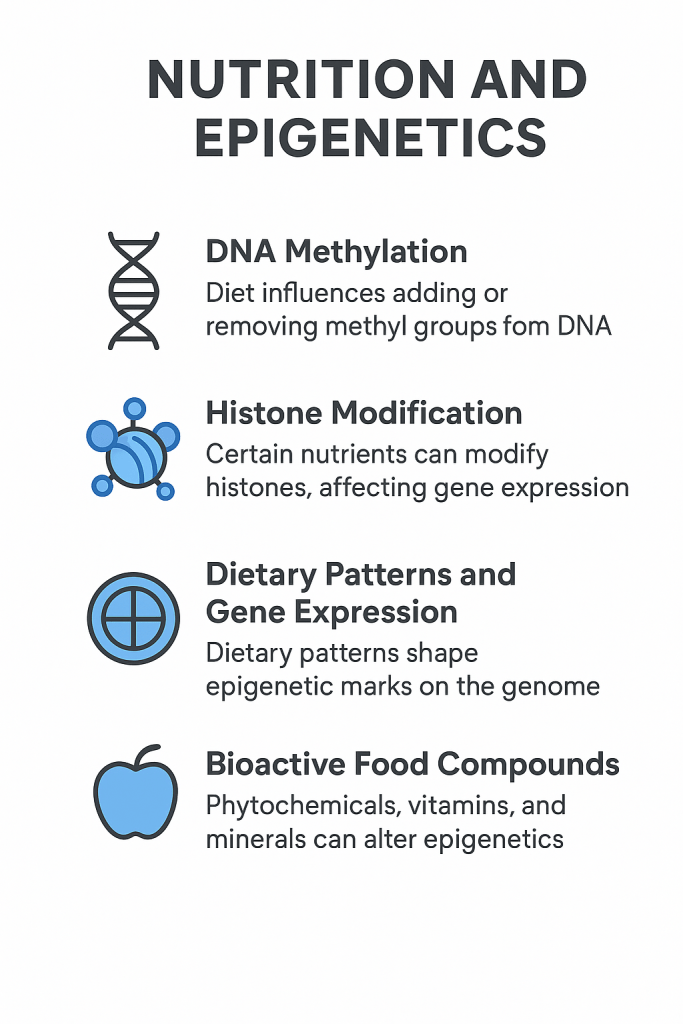
Apart from exercise, food can also act as an epigenetic tool, it can do so via aligning meal timing to our circadian rhythm. This will optimize gene expression.
Case Study: Epigenetic Impact of Two Diets with Identical Macros
Participants: 20 healthy adults, randomly assigned to two diet groups for 8 weeks.
First Diet (Nutrient-Focused):
The first diet has the same calories, protein, carbs, and fat as Diet #2 (below). It emphasizes micronutrients, antioxidants, polyphenols and omega-3s.
It includes colorful vegetables, fruits, lean meats, legumes and nuts.
Second Diet (Standard “Empty Macro” Diet).
This diet has the same calories, protein, carbs and fat as Diet A. It is low in micronutrients; consisting mostly of processed foods, white bread and sugary snacks.
Measurements:
DNA methylation patterns in genes related to metabolism, inflammation, and mitochondrial function (as mentioned in the previous sections).
Blood markers for oxidative stress and inflammation
The Results:
Diet #1 (Nutrient-rich):
This diet lead to increased methylation of pro-inflammatory genes and its reduced expression.
Furthermore, it also led to up regulation of genes linked to mitochondrial efficiency and more energy metabolism. It also led to reduced oxidative stress markers in blood.
Diet B (Processed foods):
There were minimal changes in methylation (a mechanism which we want to alter), or changes in the opposite direction (ie: pro-inflammatory genes becoming more active).
Overall there was a lower mitochondrial gene expression and increased oxidative stress markers.
Takeaway:
Even when calories and macros are identical, nutrient quality can switch genes on or off, affecting inflammation, energy use, and overall health.
Epigenetics shows lifestyle choices like diet directly influence gene expression, not just your weight or macros.
Sleep, Recovery, and Epigenetic Reset
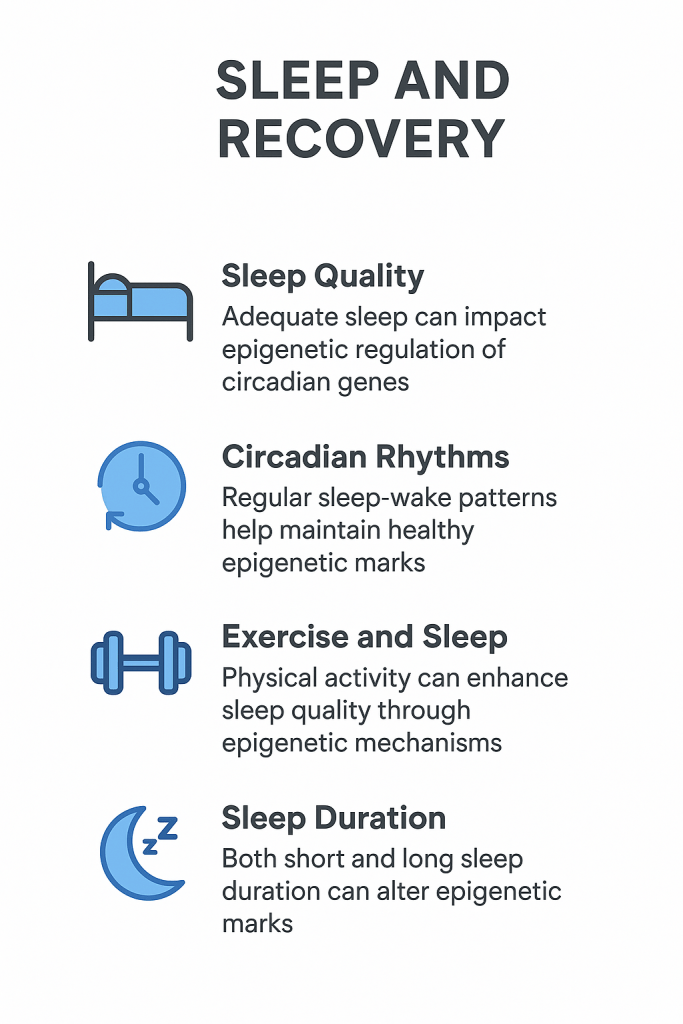
Sleep’s Role in Gene Expression:
Genes regulating stress, inflammation, and repair respond favorably to quality sleep. This is a very simple way to alter your genetics in your favor.
Aim to get 7-9 hours of uninterrupted sleep for optimal results.
Recovery & Epigenetics:
Aim to incorporate active recovery, mobility, and meditation into your routine as they positively modulate gene pathways.
Lifestyle Hacks: Consistent sleep, dark exposure and avoiding late-night stressors are great ways to optimize your epigenetic make-up.
In essence, sleep is where your DNA catches up with your lifestyle.
Stress, Mindset, and Gene Regulation

The effects of chronic stress are over-activation of stress genes, inflammation and fat storage. None of these are desirable and can lead to mental and appearance disturbances such as the experience of being overweight, wrinkles and having blemishes.
Here are some mind-body tools that we can use to lower our stress levels:
- Meditation
- Breathwork
- Journaling
- Exercise
Certain nutrients like protein and omega 3.
There is certainly no reason why we should ever believe that we can’t live our best lives ever by making simple lifestyle changes.
Even adding movement into our daily routines can change our DNA and produce/clean our cells (via autophagy and mitochondrial production).
Environmental Inputs: Light, Movement, and Toxins

Environmental epigenetics such as sunlight, pollution, chemical exposure can affect gene expressions.
It is therefore imperative to reduce our time under the sun (or simply protect ourselves via sunscreen) and to reduce our use of chemicals (commonly found in makeup, perfumes and house hold items).
Getting at least 5-10 minutes of natural light every morning, walking in nature and eating clean can alter our DNA and gene expression. These are known as positive inputs.
Negative inputs are leading a sedentary lifestyle, and exposing ourselves to endocrine disruptors (such as plastic bottles or conventional deodorant).
Women, Men, and Epigenetic Fitness
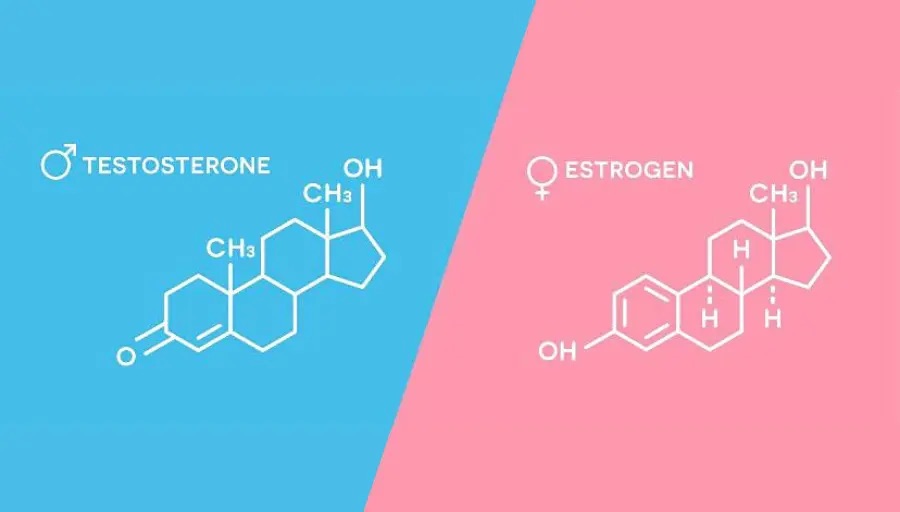
Sex-specific hormones such as estrogen and testosterone influence our epigenetic pathways differently.
Estrogen and testosterone both act like switches that turn genes on or off through epigenetic changes. They, however target different sets of genes and it’s important to know that.
Estrogen (the predominantly female hormone) mainly shapes growth, repair, and immunity, while testosterone mainly drives muscle, metabolism, and brain wiring.
Women can leverage menstrual cycles for peak gene activation in training, click here to find out how.
The Lifestyle Blueprint: Rewriting Your DNA Daily
Below is a plan that you can follow daily in order to alter your genetic expression and ultimately rewire yourself for longevity and good health.
Weekly Lifestyle Optimization Plan
Exercise:
3–4 strength sessions (30–60 min): full body focus.
2–3 cardio sessions (20–40 min): moderate or HIIT.
Daily movement: walk, stretch, or mobility work for 10–15 minutes.
Nutrition:
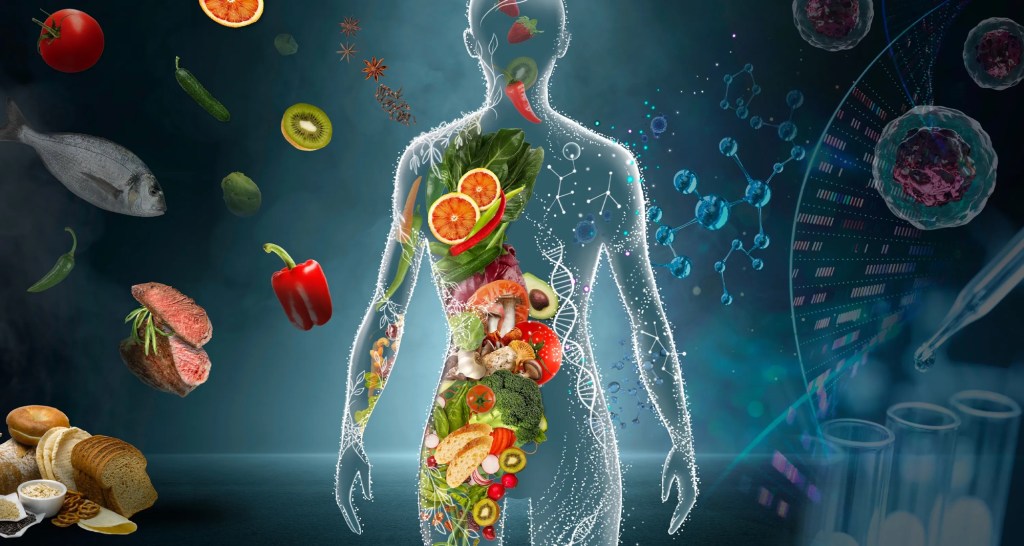
Make sure to prioritize protein with every meal while also eating whole, nutrient-dense foods (ie: vegetables, fruits and healthy fats).
Hydrate consistently (aim for 2–3 L/day) and limit processed sugar and ultra-processed foods.
Sleep:
Aim to get 7–9 hours of sleep at night, prioritizing at least 4 hours in particular of deep sleep. Make sure to also have a consistent bedtime and wake time.
Have a good wind-down routine as well where you expose yourself to low light and use no screens for at least 30–60 min before bed.
Stress Management:
To reduce the harmful effects of stress from our lives, practicing daily mindfulness or breathing exercises for 5–10 min is optimal.
Make sure to also journal and reflect 2–3x per week. Finally, we are social creatures. Make sure to spend quality time with supportive people as much as possible.
Environmental Factors:
Aim to get at least 5-10 minutes of natural sunlight per day (15-30 min if you want the best results).
Reduce artificial light at night as this can disrupt sleep and ultimately sabotage your progress the next day.
Keep your living/work space tidy and uplifting as this can psychologically boost your motivation. Do an occasional digital detox (1–2 hrs/day or full day/week)
You can also alter your daily habits. In essence, it is small, consistent changes that can accumulate epigenetic benefits.
Finally, you can optimize your mindset by focusing on long-term, sustainable changes for gene-positive living.
Conclusion
Genes are flexible, it is lifestyle choices that write your fitness destiny.
Make sure to experiment with exercise, nutrition, recovery, and stress strategies to optimize your gene expression
Finally, I hope that you are inspired by the fact that you are not your DNA, rather, you become what you do every day.
I hope that you enjoyed this blog post on Why Your Lifestyle Matters More Than Your Genetics for Fitness, please let me know what you those about it in the comments section below!

 Taras Fit World