
Hey loves,
I get asked this question all the time: “Can I get a toned and curvy body from Pilates? I don’t want to bulk up from lifting weights.”
Many women fear looking masculine, bulking up and people’s judgment in the weight room.
Pilates and weightlifting both build strength, but they are not equals when it comes to providing us with muscle gain.
This article breaks down the science, benefits, and practical differences to help women make informed choices.
By the end of this blog post, you will know whether Pilates can replace weightlifting for muscle growth and how to combine the two for best results.
Understanding Muscle Gain: What It Really Takes
Let’s learn about muscle gain. What does it take to grow muscle? Simply, muscle gain is a result of adequate stimulus via factors like intensity, duration and tempo.
The body needs to be getting stronger every week as a result of any of these factors in order to grow and develop. To simplify even further, adding more stimulus = more muscle growth.
Muscles therefore grow via the processes of progressive overload, mechanical tension and metabolic stress. These three processes are methods of growing the muscles.
Progressive overload describes our bodies growing as a result of getting stronger over time. Mechanical tension is about adding a heavy challenge on the body.
It is literally adding heavy weights on your squat, bench or deadlift. Metabolic stress is about pumping and adding stress on the body via high reps and intensity.
Imagine doing a burn out set of glutes bridges after a leg day workout, your lactic acid will fill your muscles and you will feel pretty sore the next day!
As part of any fitness program, adding resistance, volume, and intensity are important. Women typically worry about looking “too muscular” and that typically doesn’t happen unless she takes steroids.
Muscle growth isn’t about the type of exercise but whether the exercise creates enough stimulus. It isn’t even about the combination of exercises or following the right protocol.
If one doesn’t follow their intuition and be guided by strength and hypertrophic processes (aka they are blindly lifting weights), then they likely not get anywhere at the gym.
What Pilates Really Offers
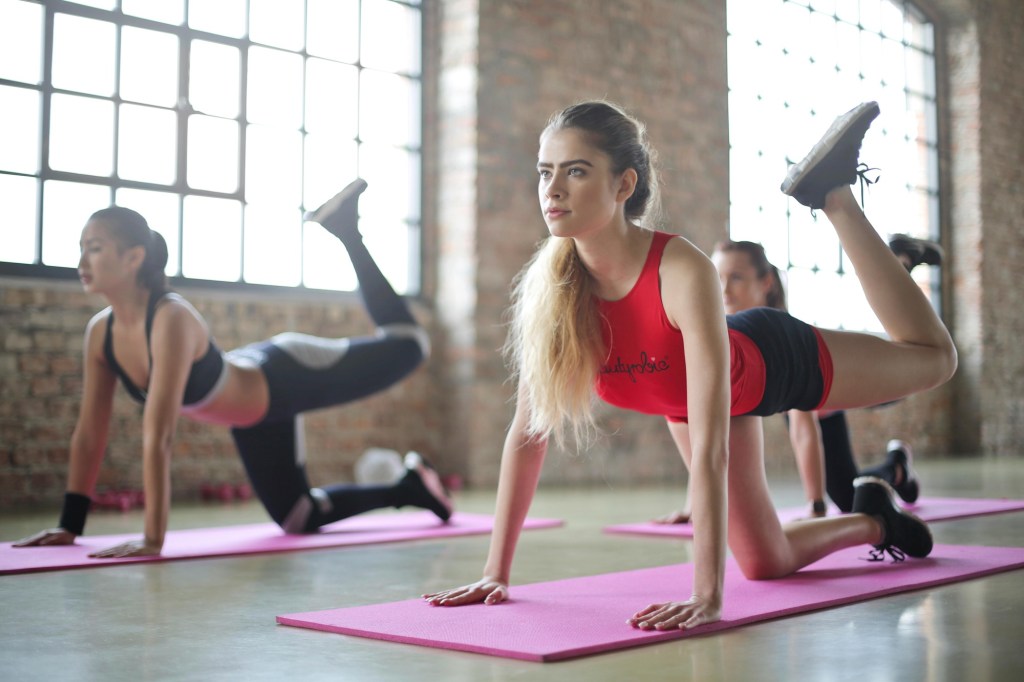
What are the origins and philosophy of Pilates training? It was developed by Joseph Pilates for control, alignment, and flexibility.
There are different styles of Pilates: there is the traditional mat pilates vs. reformer Pilates.
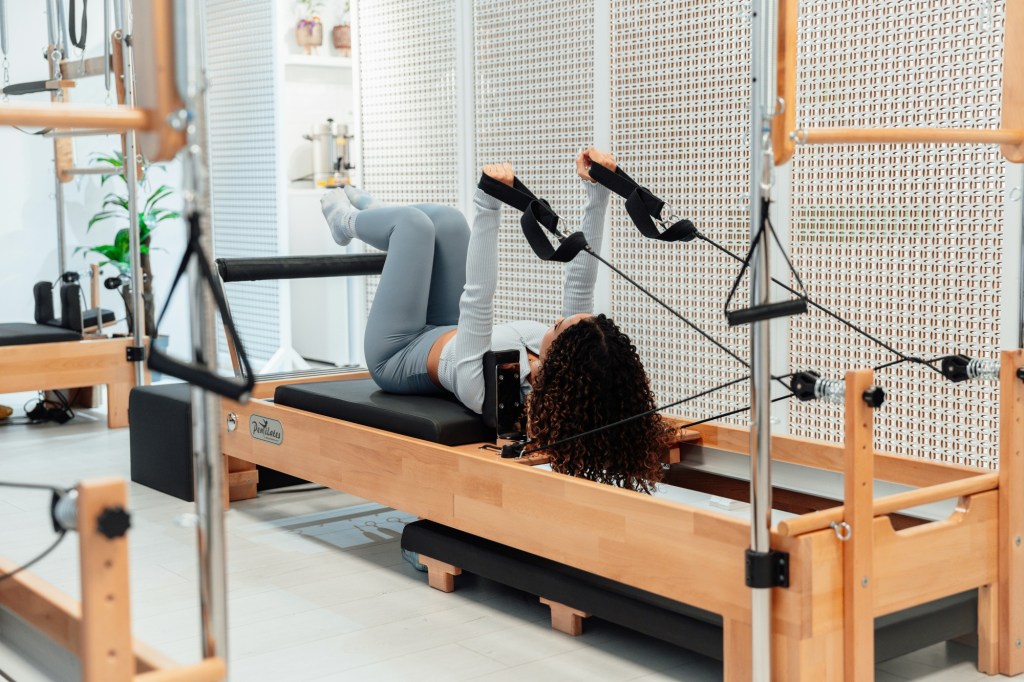
The benefits of Pilates are the following:
- Core strength and stability
- Improved posture and mobility
- Improved mind–body connection
Muscle engagement: Pilates does use bodyweight and springs, but resistance is relatively low compared to lifting.
This means that you will probably not get the very big glutes or back, for instance, from Pilates compared to lifting weights.
Having big glutes aka the curves women ask me for comes down to having strong glutes and due to the limited capacity for strength and development that bands and body weight exercises provide (mainly sources of metabolic stress), Pilates underdelivers where curves are involved.
Pilates does, however, help with toning, endurance, rehab, and injury prevention.
What Weightlifting Offers

I am going to try to be as objective and unbiased in this section as lifting weights is my sport of choice.
Firstly, what is strength training? It’s any form of training using external load such as dumbbells, barbells and machines.
This type of training builds muscle via the process of progressive overload and is more precise and scalable than other forms of sports.
Benefits for women:
- Muscle growth which leads to a stronger and leaner body composition.
- Increases metabolism and bone density.
- Empowerment and confidence in traditionally male-dominated spaces.
Common barriers of strength training are the fear of bulking, gym intimidation and lack of knowledge.
Head-to-Head: Pilates vs. Weightlifting for Muscle Gain
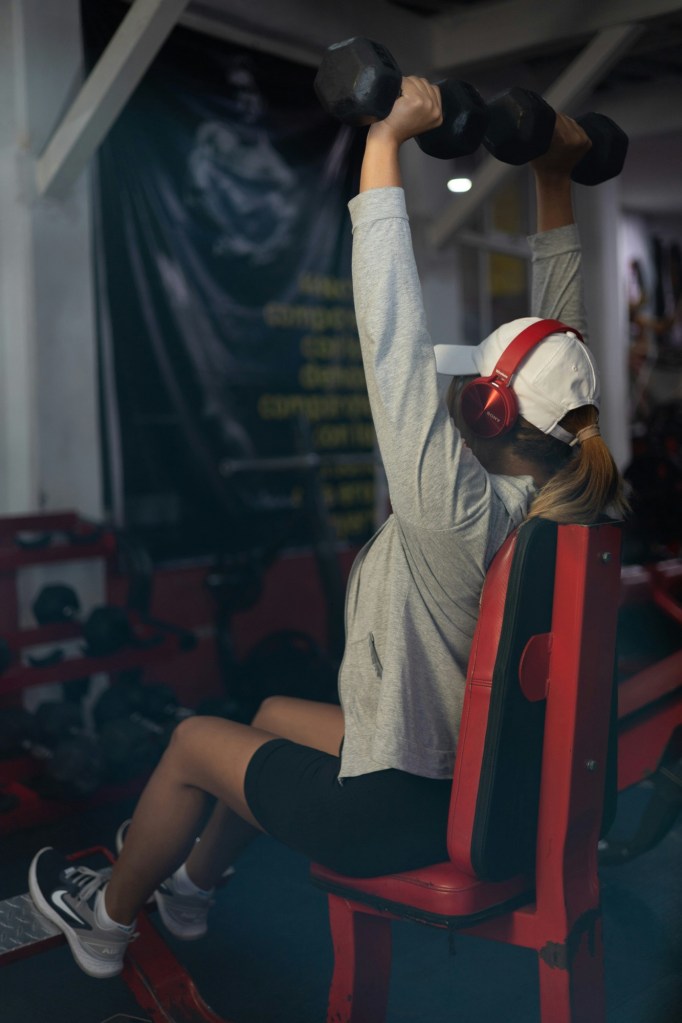
What are the difference in resistant level between both activities?
Pilates uses springs and bodyweight meaning it utilizes a low–moderate load (enough for beginners but not for advanced physique development).
Weightlifting, on the other hand, allows unlimited load progression (you can reach your physique potential).
How do both activities compare in providing us with progressive overload?
Pilates progression is limited with a change in spring tension, reps and angles.
Weightlifting is infinite with increasing and varied load, sets, reps and tempo.
What muscles do Pilates and strength training target?
Pilates trains the core, stabilizers and improves flexibility. Weightlifting on the other hand, trains all major muscle groups with greater intensity.
What are the scientific research findings?
The study by Carrasco-Poyatos et al. (2019) indicates that while Pilates improves isometric trunk and hip strength, resistance training produces greater dynamic strength gains, suggesting superior potential for hypertrophy.
Similarly, the systematic review by Pinto et al. (2022) indicates that Pilates can enhance strength, but its effects are not as robust as those achieved through traditional resistance training.
The bottom line is that Pilates builds muscular endurance and tone whereas lifting weight builds significant size and strength.
Can Women Gain Muscle with Pilates Alone?
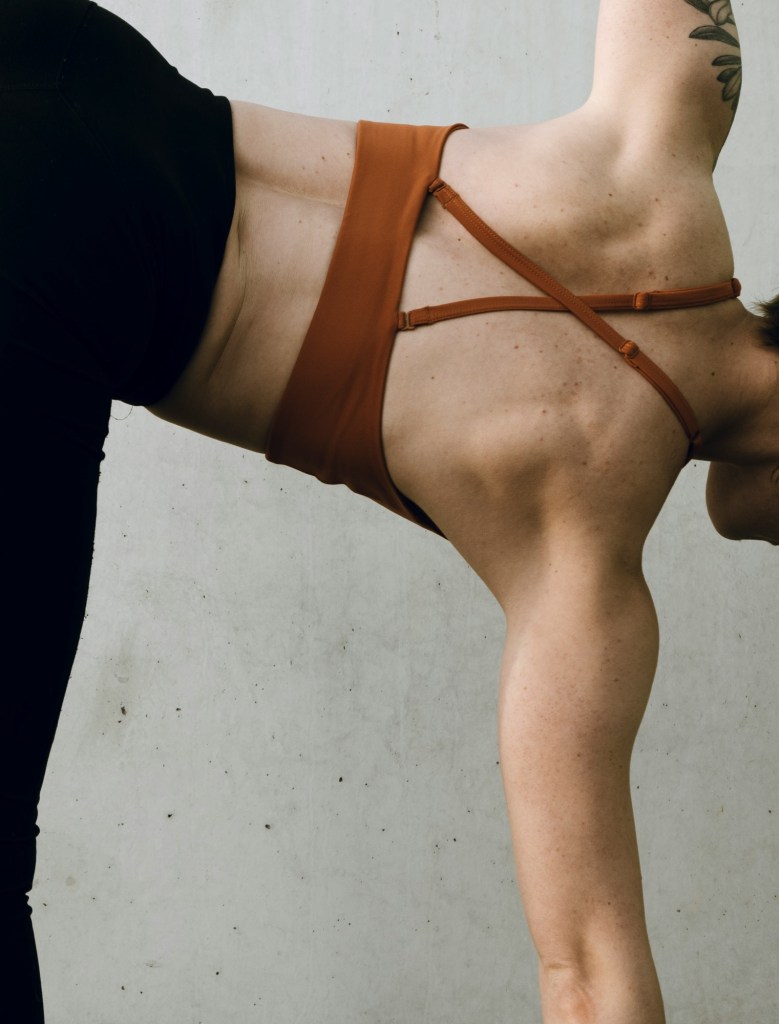
The short answer is yes, but with limits. Beginners may see some muscle tone and endurance gains. The issue lies with progression where advanced trainees plateau quickly due to lack of progressive load.
Who does Pilates works best for?
Pilates works well for women who are new to exercise. It also works well for people recovering from injury.
Finally, it works for those seeking posture, flexibility, and core control.
Who does Pilates not work for?
Unfortunately, Pilates does not work for women aiming for visible glutes, defined arms, or significant body recomposition.
How to Combine Pilates and Weightlifting for Maximum Results
The perfect pairing for women to achieve their ideal physiques is a mixture of Pilates and weight lifting.
Pilates enhances mobility, posture, and core activation. Weightlifting on the other hand, provides the load necessary for muscle growth.
Sample weekly structure:
2–3 lifting days (with a focus on full-body strength).
1–2 Pilates sessions (with an emphasis on mobility, core, recovery).
Let’s take a hypothetical client, her name is Sarah. Sarah wants toned glutes and abs so she should perform squats, hip thrusts and presses.
Her aim should be to get a hypertrophic stimulus from her weight training, this will give her the ideal body.
Pilates can be added and is a great tool for posture correction and core activation. It’s also a great way to feel sensual and be connected to our senses, this is a nice break for Sarah from the duress she experiences from lifting weights.
The psychological benefit of this combination is that women can enjoy the elegance of Pilates and the empowerment/aesthetic of lifting.
Addressing Common Fears & Misconceptions
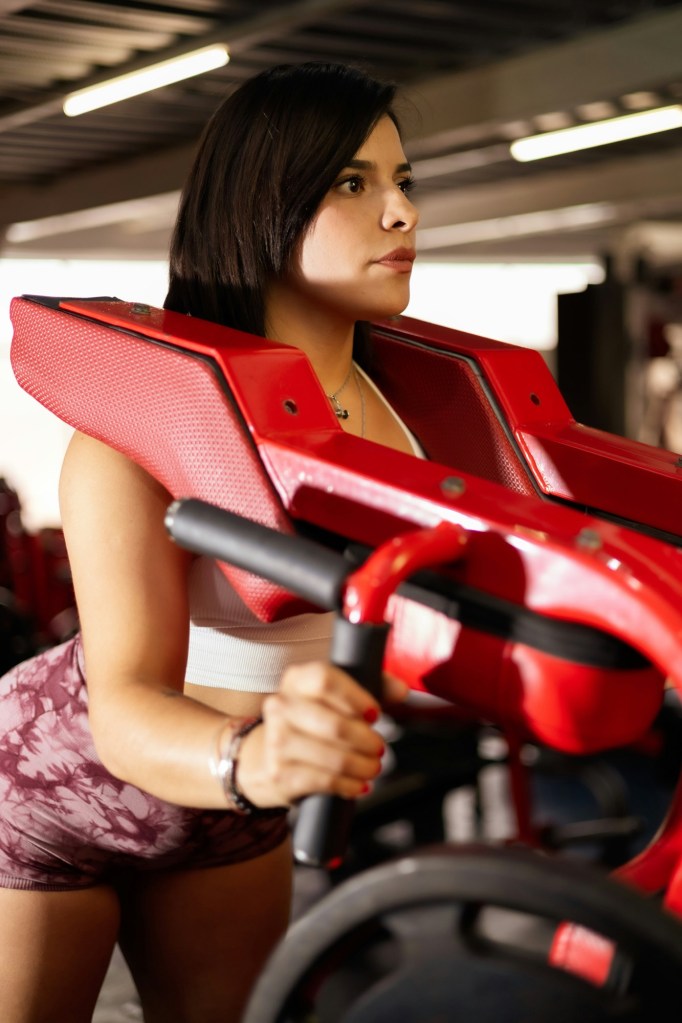
“I don’t want to bulk.” Women’s hormones and lack of testosterone make gaining large muscle difficult.
“Pilates makes you long and lean, weights make you bulky.” Muscles can’t change shape, this is a marketing myth.
Once you target a muscle, on a cellular level, it grows the exact same in all situations. Pilates does make one flexible, it does fit in well to a slim girl lifestyle and can connect one to their feminine essence.
It does not however communicate to the body to grow “feminine” muscles (vs their bulky counterpart).
“I should pick one or the other.” Both of these activities complement each other beautifully.
Practical Advice for Women Choosing Between the Two
If your goal is muscle gain, then prioritize weightlifting. If your goal, on the other hand, is mobility, posture or stress relief then Pilates works.
If your goal is both, then combine these two activities strategically.
Bare in mind that Pilates classes are expensive whereas weights are scalable and more cost-efficient.

Conclusion
Is Pilates as effective for muscle gain as lifting weights? No, but it is a nice addition to one’s fitness repertoire.
Pilates is powerful for strength, posture, and control but weightlifting remains the gold standard for building muscle.
Instead of choosing between both, embrace the two of these activities in a balanced routine that fits personal goals.
If you’re ready to sculpt your dream physique, start with lifting, then add Pilates as your secret weapon for mobility and elegance.
I hope that you enjoyed this blog post on Is Pilates as Effective for Muscle Gain as Lifting Weights? Please let me know what you thought about it in the comments section below!

 Taras Fit World